Hedgehog health guide 30°C why temperature matters
"Keeping a pet requires understanding the biological needs of the animal, especially when they come from specific climates."
Maintaining the right environment is vital for pet health. For those keeping common domestic varieties, stable heat management is the primary goal to prevent health issues.
This guide covers ideal temperature ranges, how to monitor hedgehog temp, and why temp matters to hedgehog health, while noting that specific needs vary by species.
Why is hedgehog temperature control essential?

As the chilly morning air hits my skin, I reach for the thermometer to check the enclosure for my hedgehog.
A hand reaches for a digital thermometer to check the enclosure air. Because many common pets are African in origin, they originate from warm climates staying above 22 °C (72 °F).
Establishing a baseline is the first step in effective hedgehog temperature control. If the environment is too cold, the animal's metabolism may react poorly to the drop in ambient heat.
Because these animals often come from tropical or subtropical regions, they lack the biological resilience to handle sudden cold snaps in a domestic setting.
Maintaining a stable temp for hedgehog health requires consistent monitoring of the enclosure. You must ensure that the heating elements do not cause overheating while preventing the air from dipping below necessary levels. This balance is the foundation of successful domestic care.
Maintaining a stable environment is vital because hedgehogs are highly sensitive to thermal fluctuations.
What is the ideal hedgehog temp for different species?
A pet owner adjusts the thermostat on a ceramic heat emitter. Different species have vastly different thermal requirements that must be addressed to avoid distress.
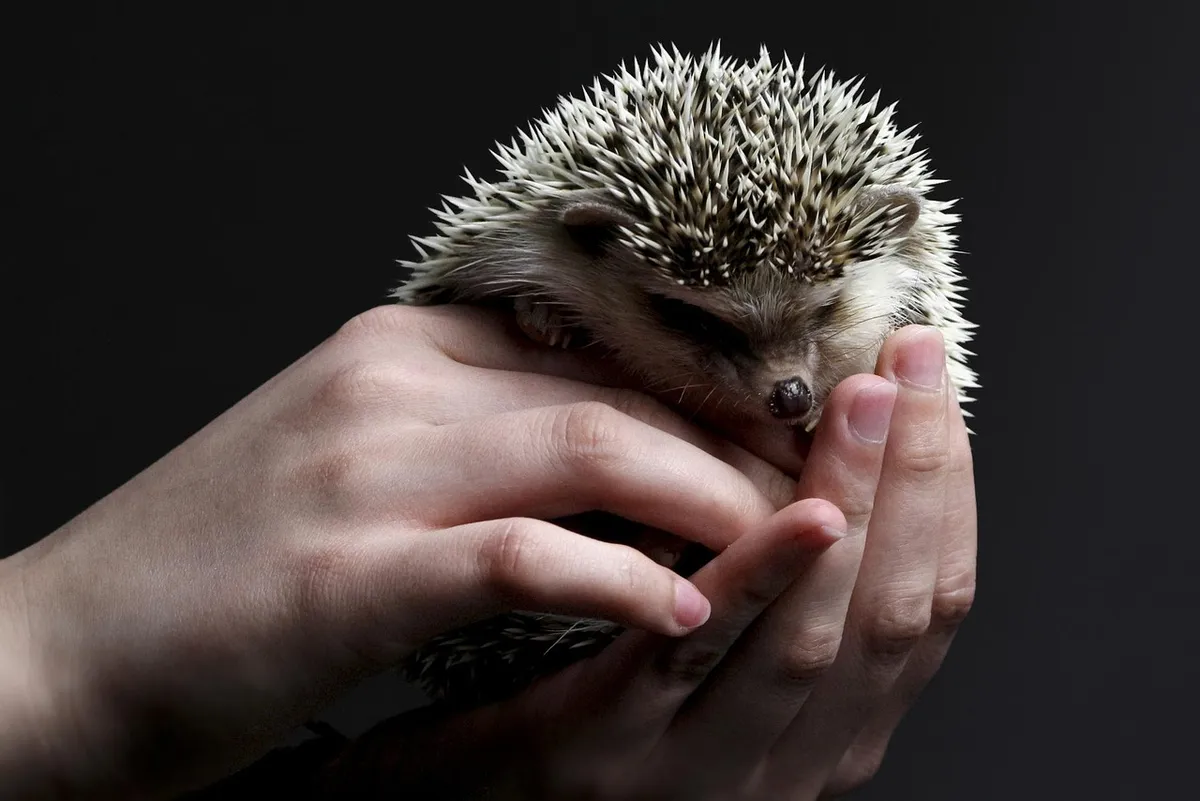
The specific needs of your pet depend entirely on its lineage. For instance, while African varieties require warmth above 22 °C (72 °F), other types have different preferences. The four-toed hedgehog, for example, tends to prefer temperatures between 24 and 30 °C (75 and 86 °F).
| Species Type | Preferred Temperature Range |
|---|---|
| African Varieties | Above 22 °C (72 °F) |
| Four-toed Hedgehog | 24 to 30 °C (75 to 86 °F) |
I always check the thermometer twice a day to ensure these ranges are met. Understanding how to monitor hedgehog temp ensures that the habitat remains within these critical windows.
In this section, the second point provides the most detail.
How to manage heat in a domestic enclosure?
A soft blanket is tucked into a corner of the cage. Managing heat involves creating a gradient so the animal can move between warm and cool spots.
To maintain a healthy environment, follow these steps:
- Set up a thermal gradient by placing heat sources on one side of the enclosure. 2. Use a reliable thermometer to verify that the warm side reaches the target range. much like the 24 to 30 °C (75 to 86 °F) preferred by four-toed varieties. 3. Provide solid surfaces, such as running wheels made of solid material approximately 1 foot (12 inches) in diameter, to allow for safe movement.

A final check involves verifying that the animal is utilizing both the warm and cool zones of the enclosure. This movement shows the animal is regulating its own temperature effectively.
- Place a ceramic heat emitter in one corner of the enclosure.
- Provide a cool area on the opposite side for the animal to retreat to.
- Use a reliable thermostat to regulate the heat source.
Why temp matters to hedgehog health and biology?
A small, soft-spined baby rests in a nesting box. Biological processes are deeply tied to the thermal environment of the animal.
Biological functions like growth and reproduction are sensitive to temperature. For certain species, temperature can influence metabolic rates and energy levels. Maintaining the right environment is not just about comfort; it is about supporting the natural biological rhythms of the animal.
For example, the physical development of young animals is a delicate process. At birth, young weigh about 10 grams (0.35 oz) and are blind and helpless, with only soft spines. In such vulnerable states, the surrounding temperature must be perfectly regulated to ensure survival.
Temperature directly influences metabolic rates and can trigger dangerous states like hibernation or aestivation.
What are the limitations of temperature management?

A person looks at a thermometer and realizes the room is too large to heat easily. Environmental control has its own set of challenges.
One limitation is that temperature requirements change based on the specific species being kept. For example, the needs of an African variety are not identical to those of a four-toed hedgehog.
External ambient temperatures can sometimes overpower localized heating elements.
The same subject is also called Hedgehog heat management.
The same subject is also called Keeping hedgehog warm.
The same subject is also called Hedgehog temperature needs.
Related
- Petz game popularity analysis: Why emotional triggers work
- Petz Ballz engine philosophy: How to build digital pets
How does the enclosure setup support the animal's needs?
The enclosure setup must facilitate the animal's natural behaviors while meeting strict thermal requirements. Providing a thermal gradient allows the animal to self-regulate its body heat, which is crucial for overall well-being.
This contrasts with a uniform temperature environment, which prevents the animal from exercising its natural physiological responses.
- The heat sources must be positioned strategically to create distinct warm and cool zones within the habitat. 2. The animal must be able to move freely between these zones, indicating successful temperature management. 3. Solid surfaces, like the mentioned running wheels, support physical activity necessary for a healthy metabolism.
A proper setup allows for a thermal gradient, giving the hedgehog autonomy over its own body temperature.
What are the long-term implications of temperature mismanagement?
Improper temperature control introduces significant physiological stress on the pet. Since keeping a pet requires understanding the biological needs of the animal, severe thermal fluctuations can disrupt essential life processes.
These disruptions go beyond simple discomfort and affect long-term health outcomes.
For instance, if the ambient heat drops too low, the animal's metabolic processes slow down markedly. This sluggish state is a direct consequence of the body attempting to conserve energy in response to insufficient warmth.
Therefore, consistent temperature maintenance is not just a preference but a biological necessity for survival.







Comments 0