Here are 5 indoor activities for your dog during the summer (various games and stress-relieving methods):
During the summer, high temperatures and restrictions on outdoor activities can threaten a dog's emotional well-being and physical health. Especially when dogs are isolated indoors for extended periods, this can lead to behavioral problems such as excessive barking, decreased concentration, and increased aggression. This article introduces 5 indoor activities that can simultaneously relieve stress and stimulate a dog's intelligence. Each activity requires minimal equipment costs, and even just 10-20 minutes per session can be effective.
1. Using Smart Puzzle Toys
These toys are effective for promoting a dog's cognitive development and improving concentration. Puzzle products that require the dog to solve a problem to access food encourage a thought process of self-problem-solving. Basic puzzles can provide 10-30 minutes of playtime and can be reused depending on the difficulty level. No equipment is needed, simple DIY puzzles are also possible, and they primarily utilize food or treats.
2. 'Hide-and-Seek' Game
The traditional "hide-and-seek" game, played with the owner and dog together, is highly effective for developing cognitive abilities and fostering a sense of interdependence. The owner hides a simple food item or toy, and the dog has to find it. The key is to start by making the location visible and gradually increasing the level of concealment. The advantage of this game is that it stimulates concentration and memory without requiring full-body exercise.
[Image of various indoor games and stress relief methods for dogs during the summer]
3. 'Step Training' with a Leash
When the weather outside is unstable, leash-based walking training indoors can be helpful. This method, often called "slow walk" or "step training," involves the dog practicing walking in sync with the owner's stride, which improves balance and self-regulation. This training is typically conducted in a long, open indoor space (such as a living room or hallway), and even just 3-5 minutes of repetition can be effective.
[Image of various indoor games and stress relief methods for dogs during the summer]
4. Sound Recognition Training (Auditory Stimulation)
Dogs have a higher sensitivity to sound than humans, so training them to respond to specific vocal commands or sound patterns is beneficial for stimulating intelligence and activating neural circuits. For example, repeating commands like "sit" or "wait" in response to variations in the owner's voice and volume can improve the dog's ability to distinguish nuances in sound. This also has a stabilizing effect on emotions by making them less sensitive to everyday noises.
[Image of various indoor games and stress relief methods for dogs during the summer]
5. Visual Tracking Game (Eye-tracking)
This is a simple game to strengthen a dog's visual attention and concentration. The owner slowly moves their finger or a small object, encouraging the dog to follow with their gaze. The key is consistent movement and a slow pace, rather than quick movements. Just 2-3 minutes per session is sufficient, and doing it once or twice a day can contribute to improved concentration.
6. Emotional Empathy Game (Mood Matching)
Dogs are very good at recognizing human emotions. This can be used to play a game called "Can you tell me how I'm feeling?" The owner expresses different emotions (joy, worry, frustration, etc.), and the dog has to guess which emotion is being expressed. Start with simple facial expressions and vocal tones, and gradually add more complex emotional displays. This training not only improves the dog's ability to recognize emotions, but also helps to strengthen the emotional connection with the owner.
7. Indoor 'Escape Game' (Security Puzzle)
It is also possible to create a simple "escape scenario" in the house. For example, put a treat in a small box and add a puzzle element that requires the dog to solve a lock before the door can be opened. This could involve pulling a valve tied with a string or pushing a lid. This activity is effective for developing problem-solving skills, as well as promoting a sense of accomplishment and self-reliance.
While the indoor environment during the summer can limit a dog's activity space, appropriate play and training can simultaneously promote emotional stability and cognitive development. The key is not "prolonged inactivity," but rather the accumulation of short, frequent stimuli. Each activity should be adjusted based on the dog's personality and age. Creating a regular play schedule and making flexible adjustments based on individual responses is the most practical approach.
Related posts
How can a pet owner tell if their dog's "bathroom habits" are abnormal?
Here are 5 basic routines to help reduce your dog's daily stress:

Nutritional supplements for boosting feline immunity: A vs. B – which is more effective?
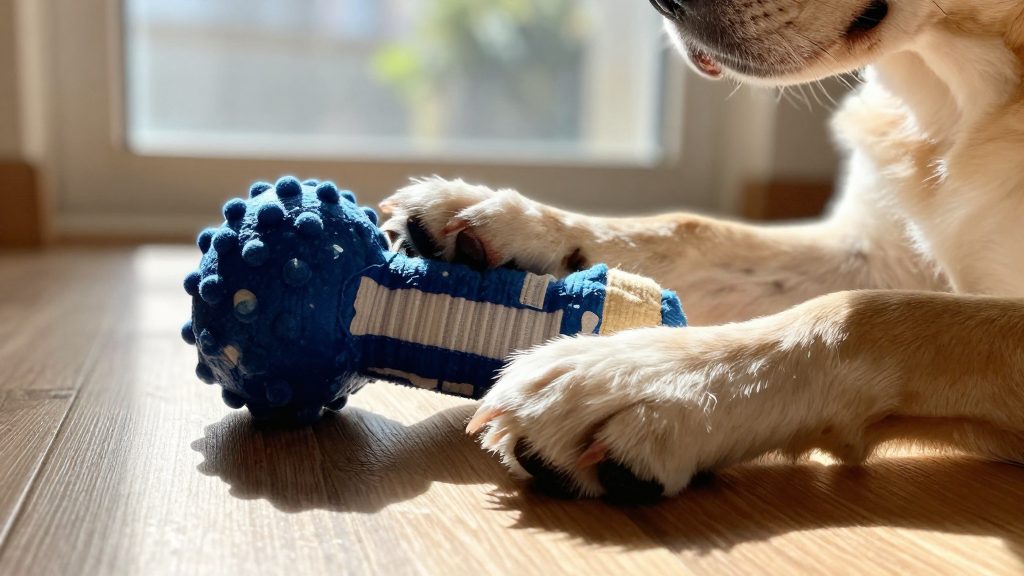
Pet toys: Rubber balls vs. stuffed fabric toys – which one is a better fit?
Popular posts
How can a pet owner tell if their dog's "bathroom habits" are abnormal?
Here are 5 basic routines to help reduce your dog's daily stress:
Nutritional supplements for boosting feline immunity: A vs. B – which is more effective?
Comments 0